The quest to understand intelligence has long captivated scientists, philosophers, and curious minds alike. By examining brain structures across different species, we’re discovering that intelligence manifests in remarkably diverse ways throughout the animal kingdom.

Cross-species brain mapping represents a revolutionary approach to neuroscience that compares neural architectures across diverse organisms. This emerging field challenges our anthropocentric views of cognition and opens unprecedented opportunities for medical advancement, artificial intelligence development, and our fundamental understanding of consciousness itself.
🧠 The Foundation of Cross-Species Neuroscience
Cross-species brain mapping involves creating detailed anatomical and functional maps of neural systems across different animals, from microscopic organisms to complex mammals. This comparative approach reveals both universal principles of nervous system organization and species-specific adaptations that have evolved to solve unique environmental challenges.
Traditional neuroscience focused predominantly on human and mammalian brains, creating a limited perspective on what constitutes intelligence. Modern comparative neurology now examines creatures as diverse as octopuses, crows, dolphins, elephants, and even insects, uncovering cognitive abilities that challenge our preconceptions about brain size, structure, and capability.
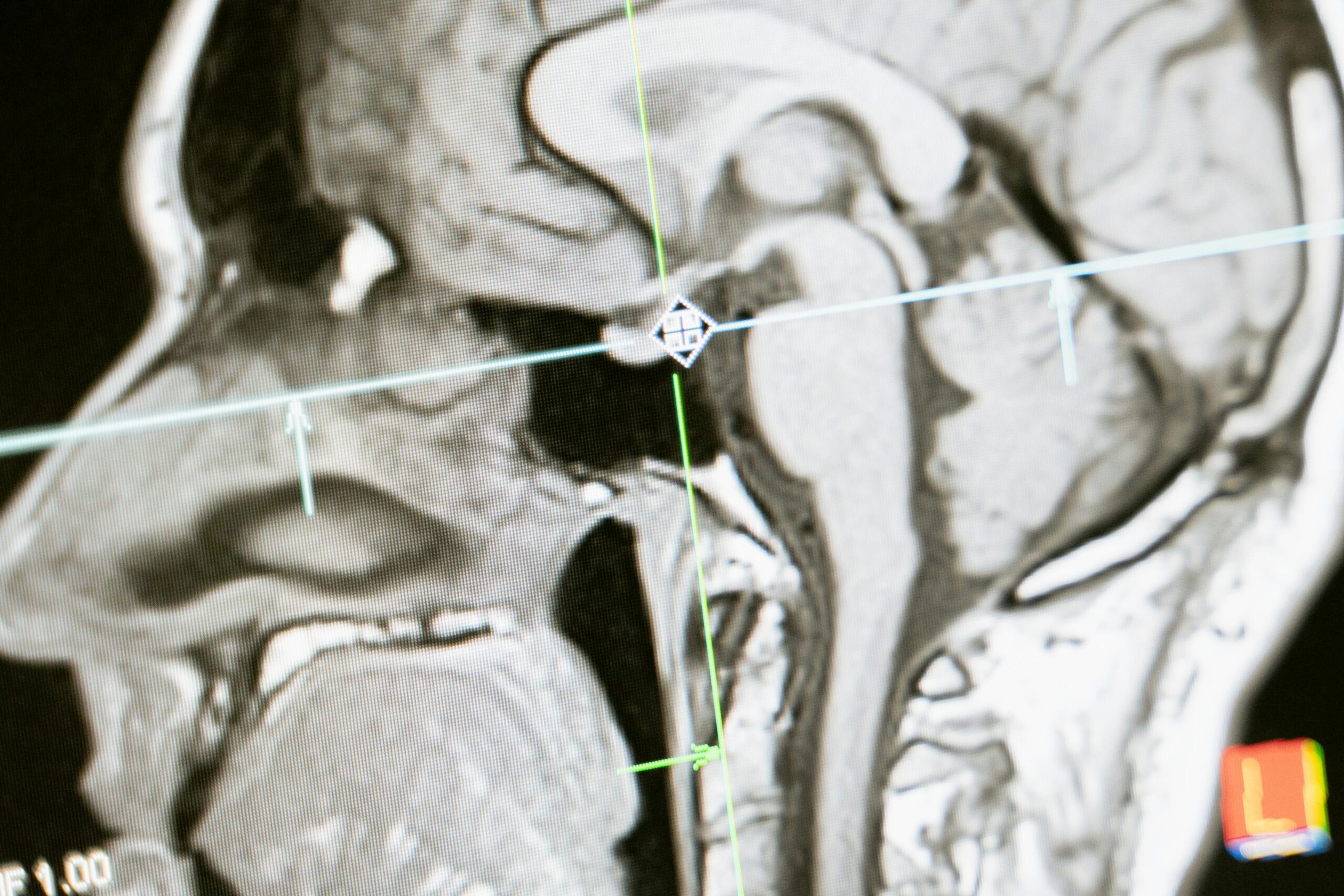
The Human Brain Project and similar international initiatives have accelerated our ability to create high-resolution maps of neural connectivity. These technological advances, combined with sophisticated imaging techniques like functional MRI, diffusion tensor imaging, and electron microscopy, allow unprecedented detail in comparing brain architectures across species boundaries.
Rethinking Intelligence Through Diverse Neural Architectures
One of the most profound discoveries in cross-species brain research is that intelligence doesn’t require a mammalian-style neocortex. Octopuses, for example, possess distributed intelligence with two-thirds of their neurons located in their arms rather than their centralized brain. This configuration enables each arm to process information semi-independently while coordinating complex problem-solving behaviors.
Avian intelligence presents another fascinating case study. Birds lack the layered neocortex found in mammals, yet species like corvids and parrots demonstrate reasoning abilities comparable to great apes. Their pallium, structured differently from mammalian brains, achieves similar computational outcomes through alternative neural architectures—a compelling example of convergent evolution in cognition.
These discoveries force us to redefine intelligence not as a single linear scale but as a multidimensional spectrum of cognitive abilities shaped by ecological pressures and evolutionary history. Different species have developed specialized intelligences—spatial navigation in homing pigeons, social cognition in elephants, tool use in New Caledonian crows, and abstract reasoning in dolphins.
The Octopus: A Window into Alternative Intelligence
The octopus brain represents one of the most alien forms of intelligence on Earth. With approximately 500 million neurons—comparable to a dog—these cephalopods demonstrate remarkable problem-solving abilities, learning capacity, and behavioral flexibility. Their neural architecture evolved completely independently from vertebrate brains, making them a crucial comparison point for understanding intelligence.
Research has revealed that octopuses can navigate mazes, use tools, recognize individual humans, and even exhibit playful behavior. Their camouflage abilities require real-time neural processing of visual information and precise control over millions of chromatophores, suggesting sophisticated computational capabilities distributed throughout their body.
🔬 Methodologies Advancing Cross-Species Brain Mapping
Modern neuroscience employs an impressive array of technologies to compare brains across species. Connectomics—the comprehensive mapping of neural connections—has progressed from simple organisms like C. elegans (with just 302 neurons fully mapped) to increasingly complex species. The fruit fly Drosophila connectome, completed recently with over 100,000 neurons mapped, represents a milestone in understanding how complex behaviors emerge from neural circuits.
Advanced imaging techniques enable researchers to observe brain activity in living animals performing cognitive tasks. Two-photon microscopy allows scientists to watch individual neurons firing in real-time, while optogenetics permits precise control of specific neural circuits to test their functional roles. These tools reveal how different species solve similar problems using vastly different neural strategies.
Comparative genomics complements structural brain mapping by identifying genes responsible for neural development and function across species. This approach has revealed surprising genetic similarities underlying brain construction in organisms as diverse as humans and sea urchins, suggesting ancient origins for basic neural mechanisms.
Computational Modeling and AI Integration
Artificial intelligence plays an increasingly important role in cross-species neuroscience. Machine learning algorithms can identify patterns in massive neural datasets that would escape human observation. These computational models help researchers predict functional connectivity from structural anatomy and simulate how information flows through different brain architectures.
Neuromorphic computing—designing computer chips inspired by biological brains—benefits tremendously from cross-species research. Engineers studying insect brains have developed remarkably efficient processors that require minimal energy while performing complex sensory processing tasks, demonstrating practical applications of comparative neuroscience.
Challenging Anthropocentric Biases in Intelligence Research 🌍
Human-centered perspectives have historically dominated intelligence research, creating biases that limited scientific understanding. We’ve traditionally valued cognitive abilities we ourselves possess—language, abstract reasoning, tool use—while undervaluing or overlooking forms of intelligence we lack, such as echolocation, magnetic field sensing, or distributed cognition.
Cross-species brain mapping reveals that intelligence manifests differently depending on ecological niches. A honeybee navigating using polarized light and performing sophisticated waggle dances to communicate resource locations demonstrates specialized intelligence perfectly adapted to its environment, even though its brain contains fewer than one million neurons.
Social intelligence in elephants includes long-term memory for individual relationships, cooperative problem-solving, and apparent mourning behaviors. Their temporal lobes contain specialized spindle neurons previously thought unique to humans and great apes, suggesting convergent evolution of neural structures supporting complex social cognition.
Language and Symbolic Thought Beyond Humans
Communication systems across species challenge simplistic distinctions between human language and animal communication. Prairie dogs use alarm calls with syntactic structure to describe predator type, size, shape, and color. Dolphins employ signature whistles functioning as names. Parrots demonstrate referential communication and can combine symbols in novel ways.
These findings don’t diminish human linguistic uniqueness but place it within a broader evolutionary context. Cross-species brain mapping helps identify neural substrates supporting different communication modalities, revealing both shared mechanisms and unique specializations.
Medical and Therapeutic Applications
Comparative neuroscience offers tremendous medical potential. Many neurological conditions affect conserved brain regions and circuits across species, making animal models valuable for understanding human disorders. Cross-species brain mapping identifies which neural mechanisms are evolutionarily ancient and which are recent innovations, guiding therapeutic development.
Studying species with remarkable regenerative abilities provides insights for treating brain injuries. Zebrafish can regenerate neural tissue after significant brain damage, a capability largely lost in adult mammals. Understanding the genetic and cellular mechanisms underlying such regeneration could revolutionize treatment for stroke, traumatic brain injury, and neurodegenerative diseases.
Sleep research benefits from cross-species comparisons. Dolphins exhibit unihemispheric sleep—one brain hemisphere rests while the other remains alert—raising fascinating questions about consciousness and suggesting alternative approaches to understanding sleep disorders in humans.
Neuroplasticity Across Species
Different species demonstrate varying degrees of neural plasticity throughout their lifespans. Songbirds regenerate neurons in brain regions controlling song learning seasonally, a process that has inspired research into stimulating neurogenesis in humans. Understanding these species-specific differences in brain plasticity could lead to interventions enhancing learning, memory, and recovery from neural damage.
🚀 Implications for Artificial Intelligence Development
Cross-species brain research profoundly influences AI development. Current artificial neural networks are loosely inspired by mammalian brains, but studying diverse biological intelligences suggests alternative architectures for machine learning systems. Insect brains, achieving sophisticated behaviors with minimal neural hardware, inspire energy-efficient AI designs crucial for embedded systems and robotics.
The distributed intelligence of octopuses informs development of decentralized control systems for robotics, where local processing in individual components enables faster responses and greater robustness. This approach contrasts with traditional centralized computing models and may prove superior for autonomous systems operating in unpredictable environments.
Studying how different species learn offers insights for machine learning algorithms. Animals employ diverse learning strategies—from honeybee associative learning to corvid observational learning to dolphin cultural transmission. Implementing similar variety in AI systems could produce more flexible and adaptive artificial intelligence.
Ethical Considerations and Consciousness Questions 🤔
As cross-species brain mapping reveals sophisticated cognitive abilities in diverse animals, ethical questions become increasingly urgent. If octopuses demonstrate problem-solving comparable to dogs, should they receive similar ethical consideration? How do we balance scientific research needs against growing evidence of animal consciousness and sentience?
The Cambridge Declaration on Consciousness (2012) acknowledged that non-human animals possess neurological substrates generating consciousness. Cross-species brain research strengthens this position, revealing neural correlates of awareness, emotion, and self-recognition across diverse species. These findings have practical implications for animal welfare regulations, conservation priorities, and our relationship with other species.
Consciousness itself remains neuroscience’s deepest mystery. Comparing brain activity patterns associated with awareness across species may help identify minimal neural requirements for conscious experience. Do insects possess subjective experiences? Where does consciousness emerge in evolutionary and developmental timelines? Cross-species brain mapping provides empirical tools for approaching these ancient philosophical questions.
Conservation and Biodiversity Implications
Understanding cognitive abilities of endangered species adds urgency to conservation efforts. Recognizing complex intelligence in animals like elephants, cetaceans, and great apes strengthens arguments for habitat protection and anti-poaching measures. Cross-species neuroscience provides scientific foundations for ethical frameworks guiding human relationships with other species.
Future Frontiers in Cross-Species Neuroscience
The field stands at an exciting threshold. Emerging technologies promise even more detailed brain maps across additional species. The recent announcement of the complete fruit fly connectome will be followed by increasingly complex organisms. Mouse and zebrafish connectomes are progressing rapidly, while ambitious projects aim toward mapping entire mammalian brains at synaptic resolution.
Integration of multiple data types—structural connectivity, functional activity, gene expression, and behavioral observations—will create comprehensive models of how brains generate cognition. These multidimensional maps will reveal principles of neural computation applicable across species boundaries, potentially unlocking secrets of intelligence itself.
Comparative developmental neuroscience examines how brains grow and wire themselves across species. Understanding these processes illuminates both evolutionary history and potential intervention points for treating developmental disorders. Some species exhibit extended developmental periods allowing complex learning, while others are born with highly structured, instinctual neural circuits.
Quantum Biology and Neural Processing
Emerging research suggests quantum effects may play roles in certain biological processes, including avian magnetoreception and potentially olfaction. If quantum phenomena contribute to neural computation, this would represent a fundamental frontier in understanding cognition across species. Cross-species brain mapping combined with quantum biology could reveal entirely new dimensions of neural information processing.
Bridging Disciplines for Comprehensive Understanding 🌉
Cross-species neuroscience inherently demands interdisciplinary collaboration. Neuroanatomists, physiologists, behavioral ecologists, evolutionary biologists, computer scientists, and engineers must work together to create comprehensive understanding. This integration of perspectives generates insights impossible within any single discipline.
Citizen science initiatives increasingly contribute to cross-species research. Projects tracking animal behavior, cataloging biodiversity, and even analyzing neural imaging data distribute scientific work across thousands of participants worldwide. This democratization of research accelerates discovery while engaging public interest in neuroscience.
Educational initiatives inspired by cross-species brain research transform how we teach biology and neuroscience. Rather than presenting human brains as the pinnacle of neural evolution, curricula increasingly emphasize diversity of cognitive solutions to survival challenges. This perspective fosters appreciation for biodiversity and challenges human exceptionalism.
The Road Ahead: Integration and Discovery
Cross-species brain mapping represents more than academic curiosity—it’s a fundamental reconsideration of intelligence, consciousness, and our place in the natural world. Each newly mapped brain, each discovered cognitive ability in unexpected species, expands our understanding of what minds can be and how they work.
The coming decades will likely bring breakthroughs in understanding neural codes—the languages brains use to represent and process information. Comparing these codes across species may reveal universal principles of neural computation or demonstrate that fundamentally different solutions to information processing have evolved independently multiple times.
As we unlock minds across species, we simultaneously unlock new possibilities for medicine, technology, and philosophy. The octopus teaches us about distributed intelligence, the crow about tool use without hands, the dolphin about aquatic cognition, and countless other species offer lessons we’re only beginning to appreciate.
This research ultimately reflects back on humanity itself. By understanding how diverse intelligences evolved and function, we gain perspective on our own cognition. We recognize that human intelligence, while remarkable, represents one point in a vast space of possible minds—a humbling and inspiring realization that redefines our relationship with the living world and opens frontiers limited only by imagination and scientific rigor.